Dive the Nashua Navy Tug off the Coast of Oahu

waikiki scuba diving octopus

Kachilla Images

An octopus rests at Navy Tug dive site.

Location: Oahu, Hawaii
Depth: 65 ft
Visibility: 15-30’
Who it’s For: Advanced Divers

What Makes it Special:

The Navy Tug Boat, Nashua, sits alone on the sand in 65-feet of water off the coast of Oahu. It was purposely sunk in 2012 to form an artificial reef, and has since become an active training site for the US Navy. Locked bins storing Naval supplies can be seen outside the ship along the sea floor.

It’s also home to numerous species of marine life, including enormous puffer fish and reef sharks who can be spotted through port holes and holes in the deck. Small coral blooms and polyps speckle the hull and deck, while various soft corals fan beneath the ship’s rudder.

At 109 feet long, the ship’s holds provide ample swim-throughs and penetration.

Dive Oahu offers premier charters to Nashua from Waikiki. Visit www.diveoahu.com/divenew to book your next dive.

Dive the Nashua Navy Tug off the Coast of Oahu Read More »

Quick Looks: The Latest Specialty Dive Masks

Scuba Diving Mask Body Glove GoPro Mount

Jon Whittle

Contact: Body Glove MSRP: $29.99

Body Glove

Passage With GoPro Mount

The bottom third of each lens has a +1.75 diopter magnification and is angled downward to help “experienced” divers see their gauges. The mask has a line at the lens seam like old-fashioned bifocals, but they’re a help for divers who wish they could bring their readers underwater.


Scuba Diving Mask XS Scuba Magnifying

Jon Whittle

Contact: xsscuba.com MSRP: $85

XS Scuba

Gauge Reader

The bottom third of each lens has a +1.75 diopter magnification and is angled downward to help “experienced” divers see their gauges. The mask has a line at the lens seam like old-fashioned bifocals, but they’re a help for divers who wish they could bring their readers underwater.


Scuba Diving Magazine IST Sports Mask Color Correcting Lenses

Jon Whittle

Contact: istsports.com MSRP: $65 mask, $15 lenses

IST Sports

MP-206 Chameleon with OL206 Lenses

Amber lenses can enhance contrast on cloudy days, but there are times when clear lenses are best. The Chameleon’s lens covers let you easily swap for changing conditions. They clip on, come off without tools and stay on securely.

Quick Looks: The Latest Specialty Dive Masks Read More »

What It’s Like To Take An Unexplained Hit

illustration of diver receiving emergency oxygen

Steven P. Hughes

Bottom Line: Don’t Deny
Delaying treatment during the first few minutes could be the difference between a good outcome and a poor one.

It can happen to anybody. You carry two computers. They both say you’re OK. You didn’t have a rapid ascent, you didn’t go into deco, you’re hydrated, you’re rested, you’ve been deeper for longer before. But you don’t feel right after the dive. What gives?

In my case, I was diving on a three-day liveaboard trip in Southern California when I came up from a dive and immediately had moderate to severe pain in my upper abdomen, just below my diaphragm. I figured it was gas, upset stomach, anything but decompression illness. But the pain was followed shortly by my legs going numb and becoming paralyzed. I can’t be bent, I thought. I must have sat on my legs and put them to sleep.

I decided to tell the captain, who started me on oxygen right away and called the Los Angeles County paramedics stationed at Cat Harbor. Oxygen made me feel much better — so much better that I didn’t think I was hit.

The paramedics insisted I go to the chamber to be assessed. I did, and the consensus was that I had a Type 2 spinal-cord hit. After five hours in the Catalina Hyperbaric Chamber, I’m fine. No lingering symptoms.

From onset to administration of 0₂ was less than 10 minutes. From onset to the chamber ride was less than two hours. I’m convinced that quick response was the key to my resolving on the 0₂ initially and having no issues after the chamber ride.

Bottom line: Don’t deny. In my case, I told the captain I needed 0₂, but if your captain tells you — listen to him. That first few minutes could be the difference between a good outcome and a poor one. I’ve always been told the first sign of DCI is denial. I didn’t deny, and I turned out fine.

What It’s Like To Take An Unexplained Hit Read More »

100 Deadly Skills: How To Survive Any Dangerous Situation

Insert from the illustrated manual 100 Deadly Skills

Jon Whittle

Skill 84
Learning to discreetly clear your scuba mask (without leaving a bubble trail) is just one of the 100 deadly skills.

Clint Emerson Author of 100 Deadly Skills

Courtesy of Clint Emerson

Clint Emerson
After spending 20 years navigating deadly situations with the National Security Agency and SEAL Team Six, Clint has just released an illustrated guide to to surviving any dangerous situation.

Clint Emerson spent 20 years navigating deadly situations with the National Security Agency and the elite SEAL Team Six. Now retired, he’s just released the illustrated 100 Deadly Skills: The SEAL Operative’s Guide to Eluding Pursuers, Evading Capture and Surviving Any Dangerous Situation, which includes scuba-friendly skills such as clearing a flooded mask without a bubble trail (No. 84), crossing enemy borders by sea (No. 11) and surviving a drowning while restrained (No. 88). We spoke with him about the secrets of his life and work (and he never even offered to kill us afterward).

Q: Were you a diver before your SEAL service?

A: Growing up in Saudi Arabia, boredom was abundant, so diving and Boy Scouts became my pastimes. I got certified as soon as I turned 12 and have never stopped diving. Learning to dive in the Persian Gulf was actually childhood “training,” prepping for an unknown future.

Q: What’s the most valuable thing about 100 Deadly Skills?

A: It’s not about becoming more deadly — it’s about becoming more safe and secure by leveraging the 100 skills. Divers travel the globe; these skills are useful for anyone traveling abroad or domestically. And people who enjoy new adventures and taking calculated risks will certainly enjoy the book.

Book cover for 100 Deadly Skills

Jon Whittle

100 Deadly Skills
The SEAL Operative’s Guide to Eluding Pursuers, Evading Capture, and Surviving Any Dangerous Situation

Q: Have you ever had to rely on your scuba skills in a life-or-death situation?

A: Fortunately, I have never had to jump from an enemy ship to my dive rig staged 20 feet below the pier — or maybe I did, hmm, I can’t remember. [Laughs.] As a kid, an adult dive partner left me behind at a tire reef in the Persian Gulf — a not-so-good dive partner, to say the least. In times of crisis, remaining calm, cool and collected becomes the most valuable tool, not having the latest, greatest gear on your back. Most of the time, the difference between life and death is how you react.

Q: What are the crucial “deadly skills” for divers?

A: As a SEAL we have several diving mantras: Never dive alone. Plan your dive, dive your plan . Don’t be scared of the dark. And dive with a full bladder, because urine is warm.

100 Deadly Skills: How To Survive Any Dangerous Situation Read More »

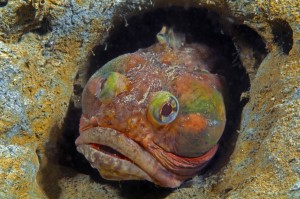
The Sarcastic Fringehead: One of the Ocean’s Strangest Fighters

sarcastic-fringhead

Many people haven’t heard of the sarcastic fringehead. Located off the Pacific coast of North America, these fish are usually less than 10 inches long, and at first glance they’re not much to look at. But don’t be too quick to judge—these guys are fascinating once they open up. The […]

The post The Sarcastic Fringehead: One of the Ocean’s Strangest Fighters appeared first on .

The Sarcastic Fringehead: One of the Ocean’s Strangest Fighters Read More »

Scroll to Top